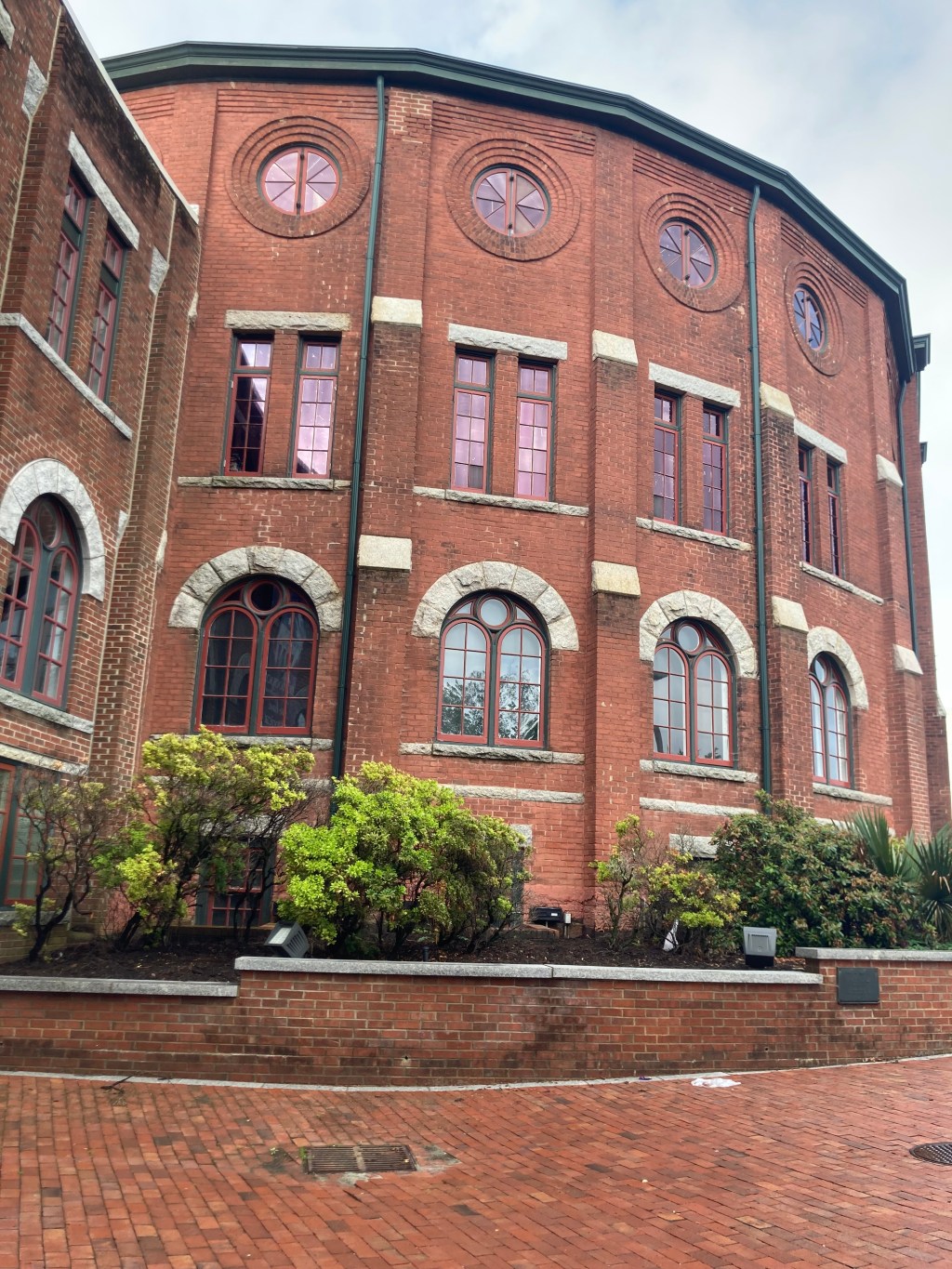
It was raining on and off for the first week of my internship. Not necessarily a bad start in my books, but something that would have an effect on my first day. I was quickly checked in and given a run-down of the first floor at 9 AM but a field trip of kids would be coming in at 9:30 to do a 2 and a half hour tour called “Little House in the Big Woods” which was a field trip centered around early settlers of North Carolina and takes place largely outside in the different historic structures next to the museum’s main building.

Due to the weather, one of the activity stations for the field trip had to be moved inside: Colonial Toys. Colonial Toys was the activity station I was assigned to shadow on my first day with my supervisor, Catherine Johns-Longwill. We had about 6 groups of kids come through our station, ranging from 5-8 kids and one or two chaperones per rotation. Toys included corn husk dolls, Jacob’s Ladders, button spinners, cup and ball, and hoop rolling. All of the toys in the station were items I had seen at one point in my life but never really played with, so I got to learn with the kids.

For the last two rotations, I got to lead the introduction and the demonstration to the students. During my first attempt, I did the introduction well, but I quickly discovered I was not very good at a lot of the games. However, regardless of my abilities, a lot of the kids appeared to have fun and enjoyed being better at the toys than I was.

Just as fast as the kids entered the building, the kids left, and it was about 12 PM when I realized how tired, dehydrated, and hungry I was. The day ended with plans for later in the week to explore the upper levels of the museum and past examples of the Summer Program so that I and the other education interns could workshop and create the GHM 2025 Summer Program centered around the museum’s centennial.

After successfully making it through my first field trip, the rest of the week was more geared toward walking and reflecting throughout the museum, comparing the different spaces and what activities could be performed with different materials, like glue sticks or colored markers, in that area. We also went back and forth proposing station themes that would be interesting and age-appropriate for students to engage with, and relevant to the space and a connecting exhibit.

Because this year is the museum’s centennial, we wanted to create activities centered around past exhibits displayed by the museum and offer a comprehensive historical experience for kids in the Summer Program can get an idea of 100 years of history exhibited by the museum. Other than the physical spaces, we also had to decide what kind of time formatting we wanted to have the program based on. The Summer Program is only 2 hours long, so it is just a bit shorter than a typical field trip.

By the end of the week, we agreed on six stations with rotations, so the first three stations will be on an hour rotation, and then the next hour will be a rotation of the last three stations. Our idea was that the first 3 stations could be centered around older exhibits and historical events, and the last three stations could be more contemporary events.

Overall, we agreed that we wanted the kids to reflect on the concept of time and how they play an active role in contributing and controlling history and should leave viewing themselves as part of Greensboro’s history. As we work through the stations, we will meet up with different departments, like collections and archives, to better incorporate primary documents into our activities.
Name Badge received on my first day
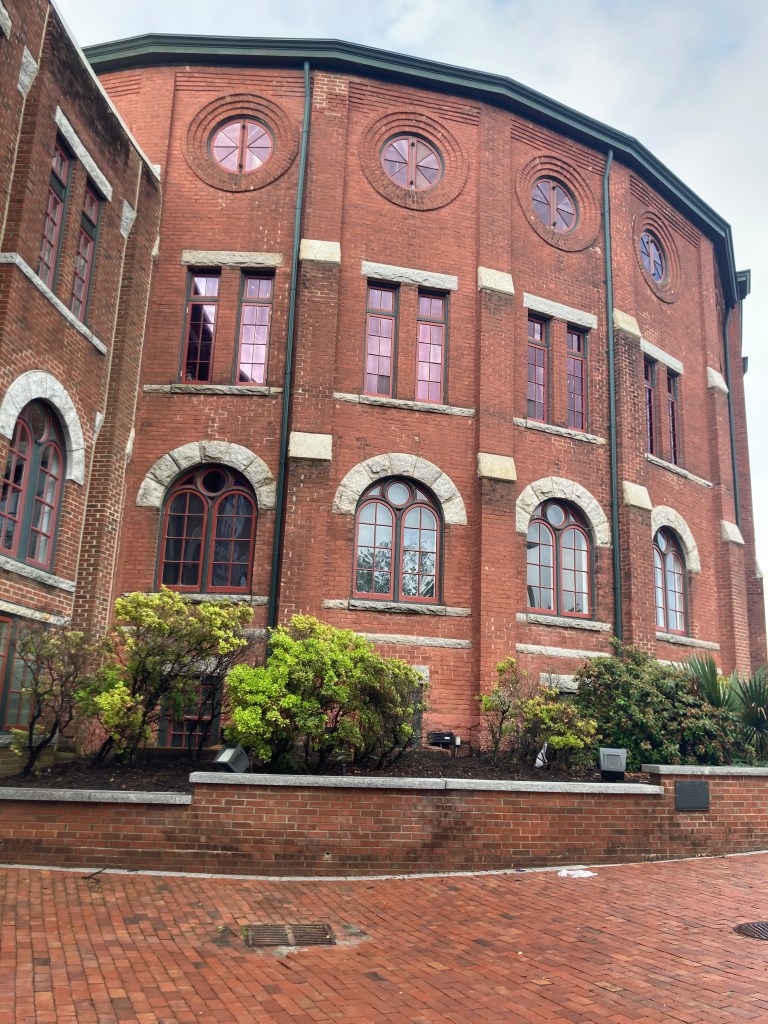
Outside the museum on my first day
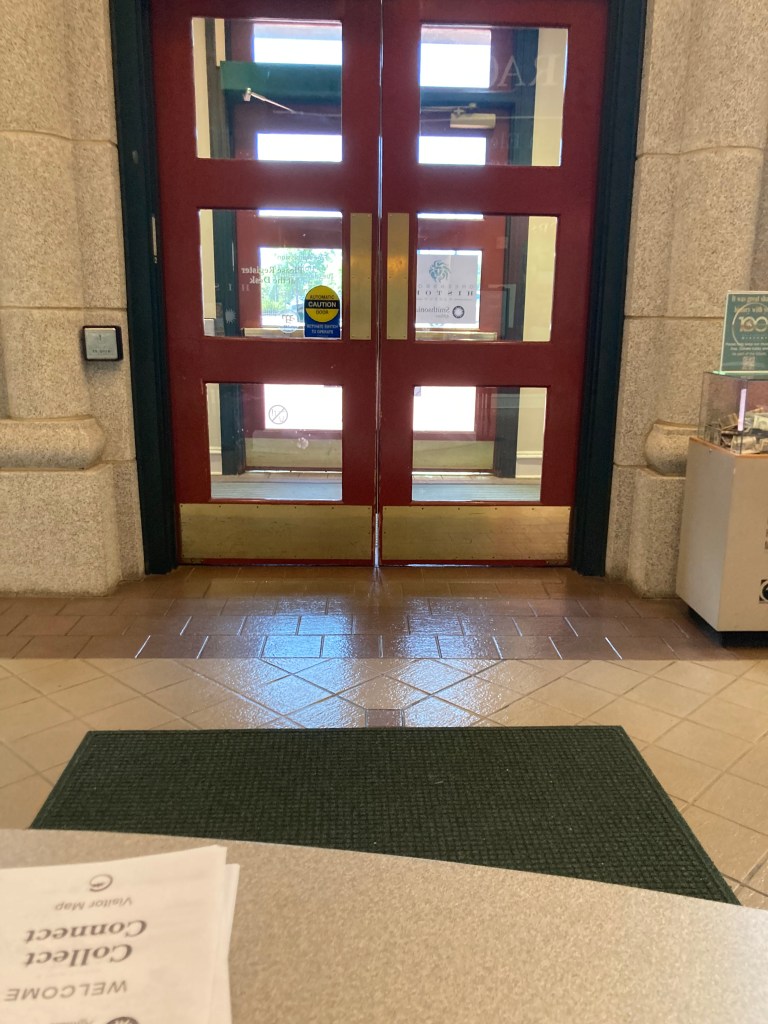
Being trained at the front desk
 Kennedy Gray Fripp Internship GHM